
How to Copy/Paste from a Command Prompt (DOS / CMD) Window


How often have you had a need to copy and/or paste text either to or from the command prompt in Windows?  Here's how...

To copy text from a command prompt window


First select and copy text from any Windows program, then open a command prompt window.

Next...

RIGHT-CLICK on the TITLE BAR...


Select EDIT. You will now be able to paste your selected text into the command prompt window by clicking on PASTE.

To paste text from a command prompt window

You must first RIGHT - CLICK on the command prompt window title bar, select EDIT then select MARK


After doing so, you will be able to select text within the command prompt window by clicking and dragging with your mouse...
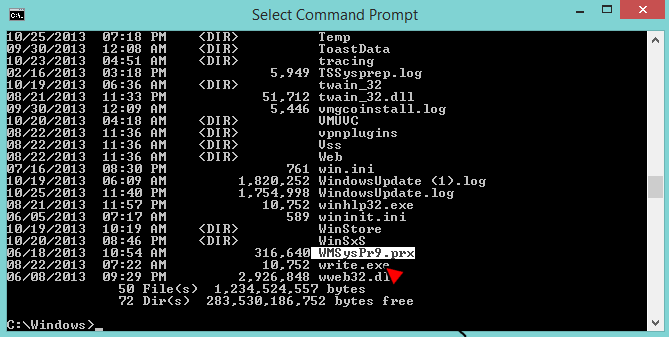


After selecting your text, you will need to RIGHT-CLICK the TITLE-BAR, select EDIT then select COPY...


Last step, open the Windows program you wish to paste the copied text.


Comments

Popular posts from this blog

"This content requires HDCP for playback" Apple TV fix

Perhaps you are having issues viewing Netflix, iTunes or any other streaming content via your Apple TV device? First, the short answer regarding the fix (in most cases)... 1). Leave your Apple TV device ON. 2). Turn OFF your TV for 10 seconds. 3). Turn ON your TV. 4). Now attempt to view the content on your Apple TV (hopefully without error). Behind the answer... Depending on the content being streamed, there is an authentication process that takes place when you request content. The user is usually oblivious of the this, that is until something goes wrong. HDCP stands for (H)igh bandwidth (D)igital (C)ontent (P)rotection. Even if you are only mildly interested in the 'what' of HDCP, I highly recommend checking out this simple yet concise and exhaustive explanation on Wikipedia, which can be found here... High-bandwidth Digital Content Protection - An Overview More specific information regarding the HDCP issue and Apple TV can be f...

Get List of Exchange Public Folder User Permissions

In the past, end users who should not have had the ability to delete certain Exchange Public Folders from within their Outlook client accidentally  were able to do so.  When these users were initially set up for access to the folders, they were given the permission of 'Owner.'  Reason being, staff at the time were not set on how to grant the proper least priority permissions which would enable the users to make changes within in the folders without escalated permission that also allowed them to delete the folders. To correct the problem, I first needed to know who had what permissions to each folder.  What follows are several commands which can be used within the Microsoft Exchange Management Shell that allows you to obtain such information.  You can either output the information on screen, or to a file where you can use such a tool such as Excel to examine and sort the data. In the following examples, replace FOLDERNAME with the name of your ...